A regular service keeps a hot water system safe and helps it last. Key safety parts such as the relief valve and tempering valve wear over time, and the sacrificial anode that protects a storage tank from corrosion is designed to wear away. Your owner's manual sets out what needs checking and how often. Follow it, and use a licensed plumber or the manufacturer's service network for the work.
Why servicing matters
- Safety. Hot water systems hold water at high temperature and pressure, and many use gas or mains power. The relief valve releases water if the pressure or temperature in the tank gets too high, so it needs to work when it's needed.
- Tank life. Replacing a worn anode before it's spent helps protect the tank from corrosion. Once a tank corrodes through, it usually has to be replaced.
- Warranty. Manufacturer warranties can depend on the system being installed and maintained as the manual describes. Keep a record of each service.
- Fewer surprises. A service is a chance to spot a small leak, a weeping valve or early corrosion before it turns into a cold shower.
What a service usually involves
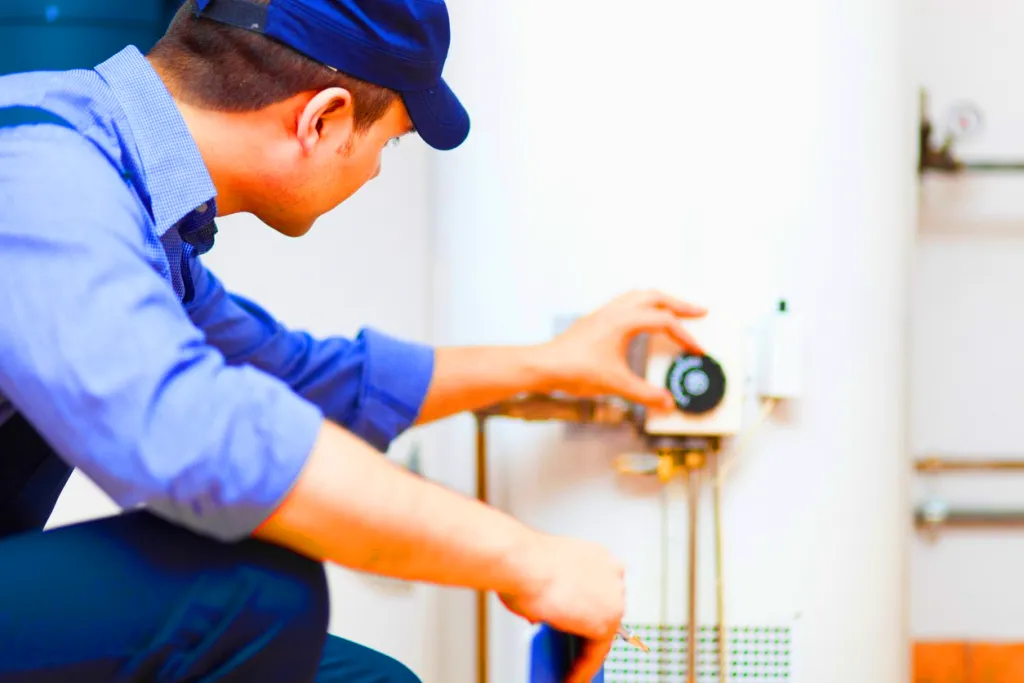
Storage tanks (electric, gas, solar and heat pump)
- checking that the pressure and temperature relief valve works, and replacing it when the manual says
- inspecting the sacrificial anode and replacing it if it's worn
- checking the tempering valve that limits bathroom temperatures
- checking other valves, such as the cold water isolation valve and any pressure-limiting or expansion control valve
- looking for leaks, corrosion and damage to the tank, fittings and pipe insulation
- on some systems, flushing sediment from the tank
Electrical parts
Checking the element, thermostat and wiring connections. This involves live electrical parts and must be done by an appropriately licensed person.
Gas systems
A licensed gasfitter checks the burner, pilot or ignition, gas pressure, flue and ventilation, and the gas control. This applies to gas storage tanks and gas continuous-flow units.
Heat pumps
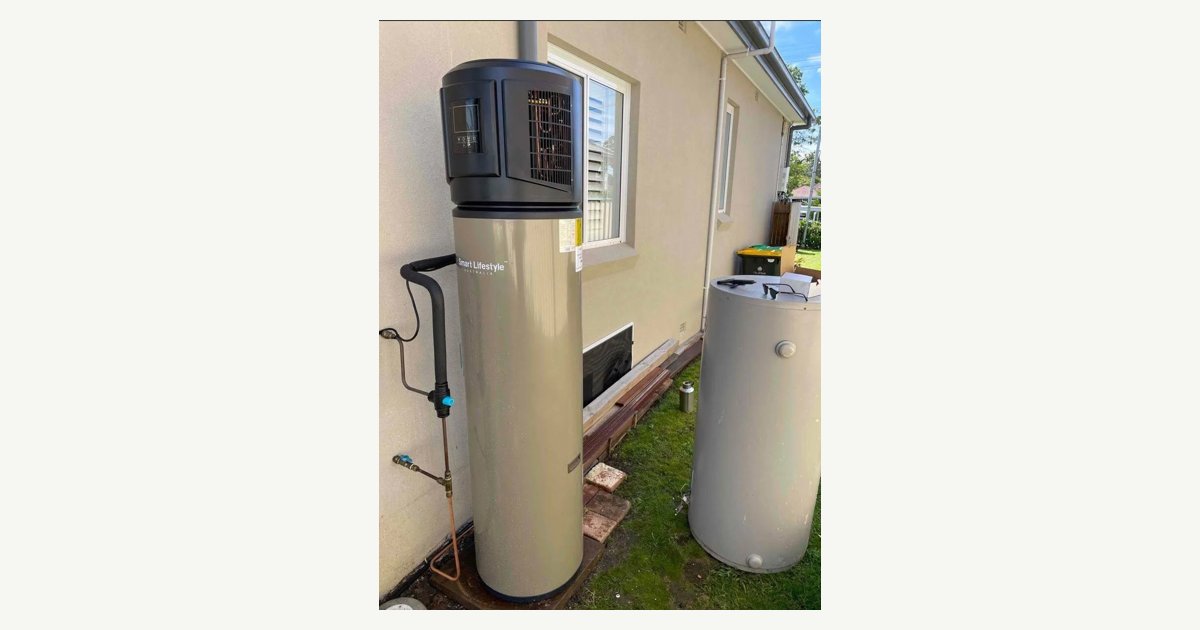
As well as the tank checks above, a heat pump service usually includes cleaning the air filter or the coil the fan draws air through, checking the condensate drain is clear, checking the fan and controller, and looking for stored error codes. Some manufacturers let owners clean the filter themselves; the manual says whether you can.
Solar systems
Checking the collectors, roof pipework and insulation, the booster, the circulation pump and controller on split systems, and on some systems the fluid that carries heat from the collectors. Roof work needs someone equipped to do it safely.
How often?
The manual for your system sets the interval for a full service and for individual parts such as the anode and relief valve. Intervals differ between brands, models and local water conditions, so there's no single rule that fits every system. If you've lost the manual, the manufacturer's website usually has a copy; search for the model number on the tank's data plate.
What you can do yourself
- Ease the relief valve lever if your manual tells you to, as often as it says and in the way it describes. Stand clear of the drain outlet, because the water is hot.
- Look around the tank every so often for drips, pooling water or rust.
- Keep the area around a heat pump clear of leaves, plants and stored items so air can flow.
- Note any new noises, error codes or changes in water temperature, and mention them at the next service.
- Keep your manual, invoice, serial number and service records together.
Leave everything else to a licensed tradesperson. Don't remove covers, adjust the tempering valve or try to replace an anode yourself. If you notice any of the warning signs of a failing system, book a check sooner.
Who to book
For a system under warranty, start with the manufacturer. Many have a service network or a list of authorised service agents, and the warranty terms may say who can work on the system. Otherwise, a licensed plumber who works on your type of system is the usual choice, with a licensed gasfitter for gas work. Ask what the service includes and get the price in writing before work starts.
How Le Water can help
When we install a heat pump, the handover covers how it works, its settings, and the warranty and support details, so you know what servicing the manufacturer expects. If a service shows your current system is near the end of its life, we can recommend a suitable heat pump and quote the replacement in writing. Read about warranties and aftercare or how installation works.