Dux is a hot water brand on the Australian market, known for electric storage, gas storage, gas continuous-flow, solar and heat pump water heaters. Le Water doesn't list Dux in its current range, but the system types below are the same choices you'll weigh up with any brand. For current Dux models, specifications and warranty documents, go to the Dux website.
Electric storage
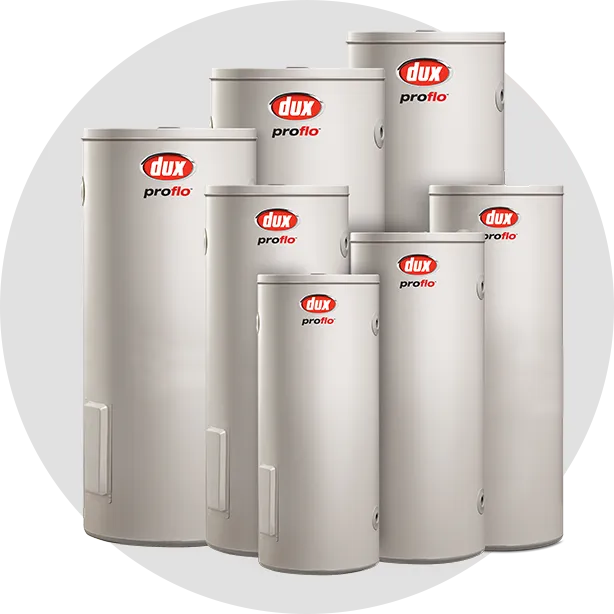
An electric storage system heats water in an insulated tank with an element and a thermostat. Many run on an off-peak tariff and heat overnight. They are simple, quiet and usually the most straightforward like-for-like replacement. The trade-off is energy use: the element turns electricity straight into heat, so all the heat in the water comes from electricity you pay for.
Gas storage
A gas storage system heats the tank with a burner underneath and vents through a flue. It usually reheats quickly. It needs a gas connection and the right clearances for the flue.
Gas continuous flow
A continuous-flow (instantaneous) system has no tank. It heats water only as it flows through, so it doesn't run out while gas and water are supplied. These units are sized by flow rate in litres per minute rather than tank volume, and your gas meter and pipework need enough capacity for the unit. They suit homes that already have gas and limited space for a tank. Our guide to sizing a tankless water heater explains flow rates.
Solar
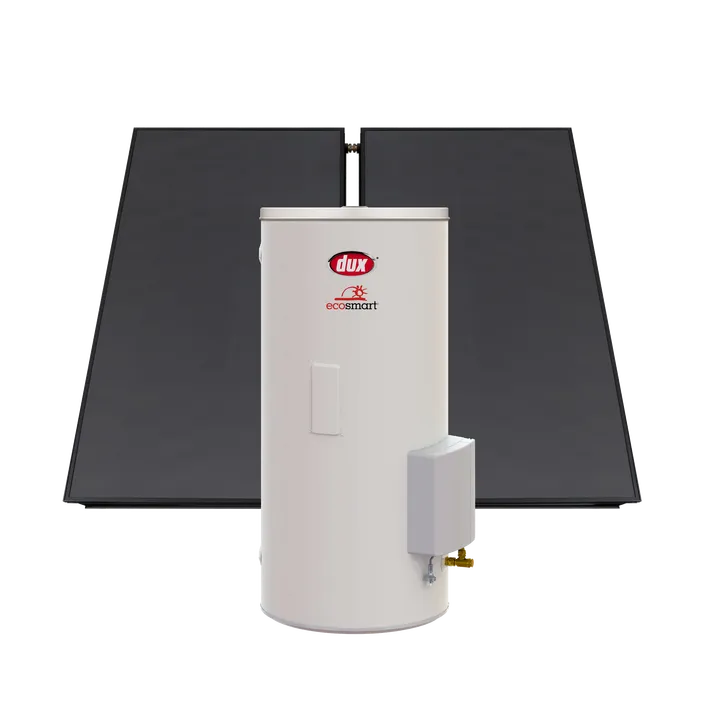
A solar hot water system uses roof collectors to heat water, with a gas or electric booster for cloudy days and winter. In a split system the tank sits on the ground; in a close-coupled system it sits on the roof above the collectors. Roof orientation, shading and roof strength all affect suitability.
Heat pump
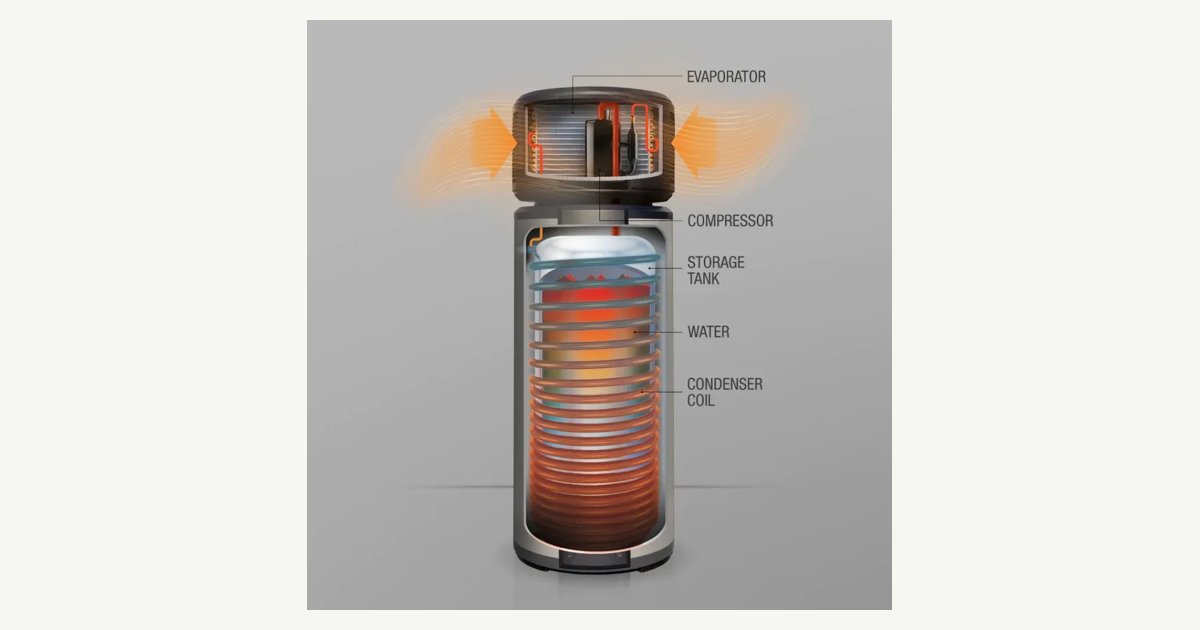
A heat pump moves heat from the surrounding air into the water using a fan, refrigerant and a compressor, rather than making heat with an element. It usually uses less electricity than an electric storage tank to heat the same water. How much less depends on the model, climate, tariff and how you use hot water. Heat pumps come as all-in-one units or split systems with a separate outdoor unit. See how heat pumps work.
How to choose between them
| Type | Energy | Main needs | Often suits |
|---|---|---|---|
| Electric storage | Electricity | Space for a tank | Simple replacements, or sites with no outdoor space for a heat pump |
| Gas storage | Gas | Gas supply, flue clearance | Homes staying on gas that want stored hot water |
| Gas continuous flow | Gas | Enough gas capacity; wall space | Homes staying on gas with limited space |
| Solar | Sun, plus gas or electric boost | Suitable roof, little shade | Homes with a good roof aspect |
| Heat pump | Electricity, with most heat from the air | Outdoor position with airflow | Homes replacing an electric tank, or moving off gas |
Whichever type you choose, compare the exact model's storage or flow rate, energy use, noise, installation needs and written warranty. The Australian Government's Your Home guide to hot water is a good independent overview.
Dux and Le Water
We don't list Dux in our current range. For Dux products, warranty documents and service contacts, use the Dux website. Our Dux brand page has more background. If you have a Dux system that has stopped working, a licensed plumber or Dux's own service contact is the right first call.
How Le Water can help
If you're replacing a Dux electric or gas system and want to look at a heat pump, we supply and install heat pump hot water systems across metropolitan Melbourne. Our current range includes ECONOVA, Ecogenica, Chromagen / Midea and iStore. We also install solar hot water systems, though we don't repair them. Tell us what you have now and we'll quote the whole job in writing. Compare options on our current range page.