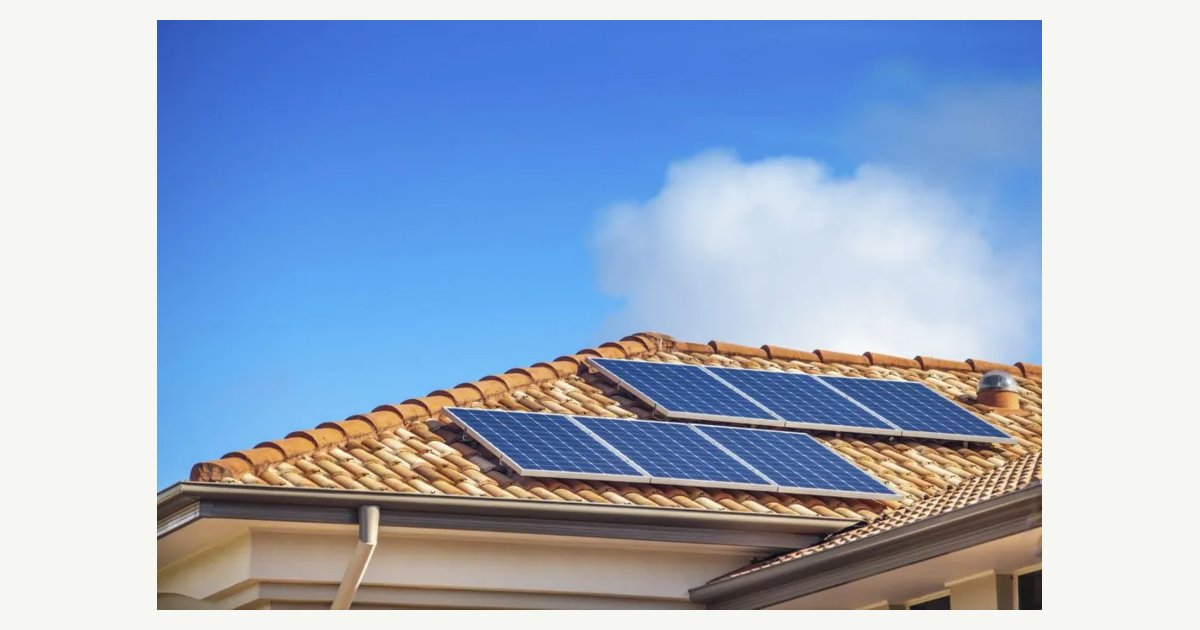
A vacuum tube solar water heater, also called an evacuated tube system, uses rows of glass tubes on the roof to collect the sun's heat and pass it to a storage tank. Each tube has a vacuum between two layers of glass. Like the walls of a thermos flask, the vacuum stops heat escaping, which helps the collector keep working well when the air outside is cold. Evacuated tubes are one of the two main types of solar collector; the other is the flat plate panel.
How the tubes work
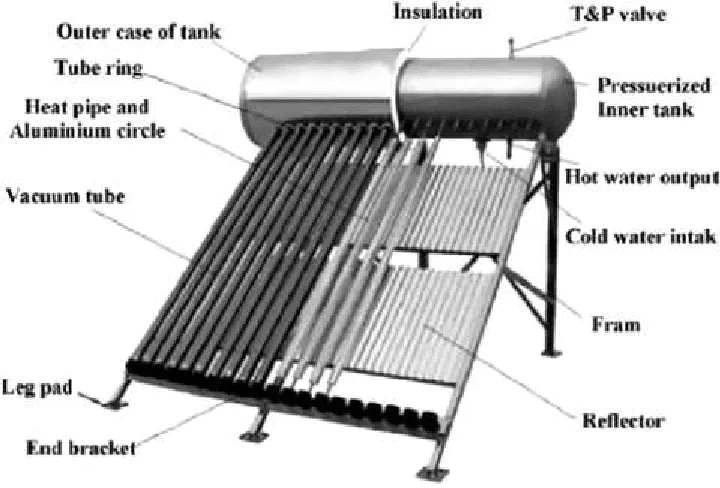
Each tube is made of two glass tubes, one inside the other, sealed together at the ends with the air removed from the gap between them. The inner tube has a dark coating that absorbs sunlight and turns it into heat. The vacuum around it means very little of that heat is lost to the air outside.
Many systems use heat pipes to move the heat:
- A sealed copper pipe runs down the middle of each tube, holding a small amount of liquid.
- As the tube heats up, the liquid turns to vapour and rises to the tip of the pipe.
- The tip sits in a header (manifold) at the top, where water passing through picks up the heat.
- The vapour cools, turns back into liquid and runs down the pipe to start again.
In other designs, water flows through the tubes themselves. Either way, the heated water ends up in an insulated storage tank.
Evacuated tubes compared with flat plate collectors
| Evacuated tube | Flat plate | |
|---|---|---|
| How heat is held in | A vacuum layer around each tube | An insulated box under a glass cover |
| Cold weather | Loses less heat to cold air | Loses more heat as the air gets colder |
| Frost | In heat pipe designs, household water doesn't flow through the tubes | Needs suitable frost protection in frost-prone areas |
| Damage | In many designs a broken tube can be replaced on its own | Damage usually means replacing the panel |
| Appearance | Rows of round glass tubes | A flat panel, a bit like a skylight |
Neither is better everywhere. In mild, sunny conditions both can do the job well. The right choice depends on your climate, roof, budget and the specific model, so compare complete systems rather than collector types alone. Whatever you choose, ask how the whole system is protected from frost and from overheating in summer.
Boosting and where the tank goes
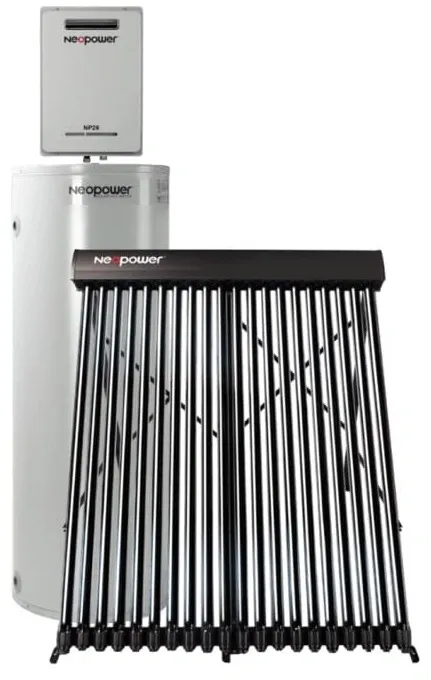
No solar system heats all your water all year. A booster, running on gas or electricity, tops up the tank when the sun can't keep up. Some boosters sit inside the tank; others are a separate gas unit that heats the water as it leaves the tank.
The tank can go on the roof above the tubes (close-coupled, with no pump) or on the ground (split, with a small pump and controller). A ground tank keeps the weight off the roof but needs space beside the house.
Is an evacuated tube system right for you?
- Roof. Do you have unshaded roof space facing roughly north? Can it take a full tank if you want a close-coupled system?
- Climate. Cold winters are where the vacuum insulation earns its keep.
- Booster. Gas or electric, and how it's controlled, makes a real difference to running costs.
- Incentives. Eligible solar water heaters can create federal small-scale technology certificates, and state programs may also apply. Rules change.
- Support. Ask who supplies replacement tubes and parts, and which manufacturer warranty terms apply.
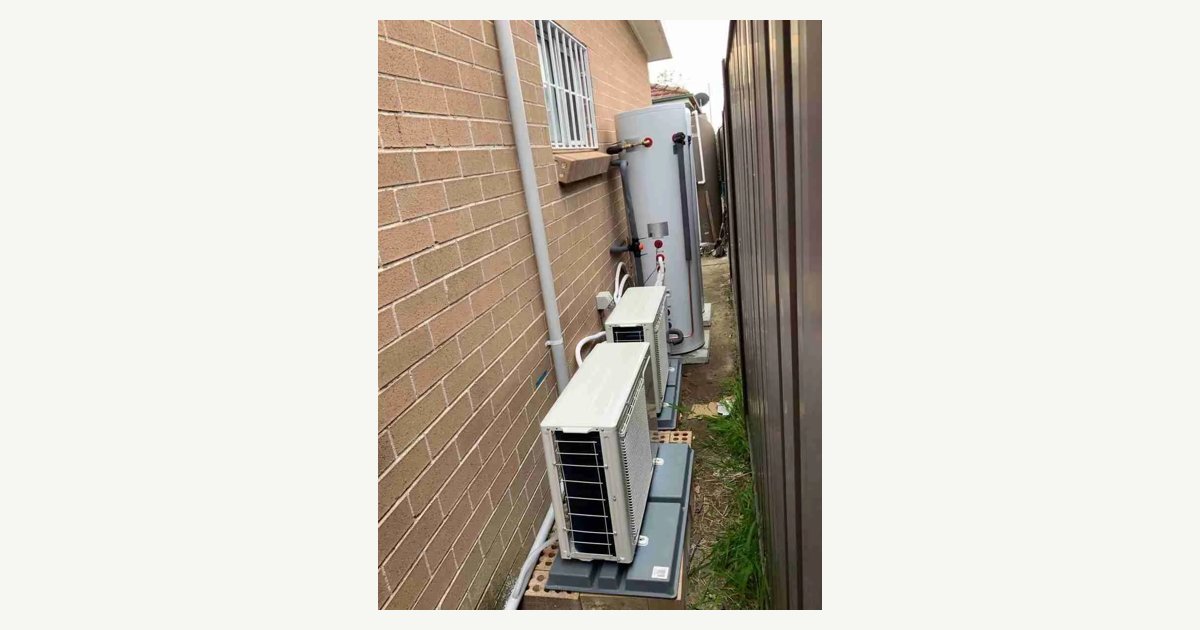
If your roof doesn't suit solar, a heat pump may be a better fit. It heats water using warmth from the outside air, so it needs no roof space at all. See our current heat pump range or read whether solar hot water suits your home.
How Le Water can help
We install solar hot water systems as well as heat pumps. We don't repair solar systems, so for a fault with an existing one, contact the manufacturer or a licensed plumber. Tell us about your roof, your current system and your household, and we'll recommend a suitable option with the whole job set out in a written quote. Read more about solar hot water installation. Our installation team works across metropolitan Melbourne; elsewhere, ask us and we'll confirm.