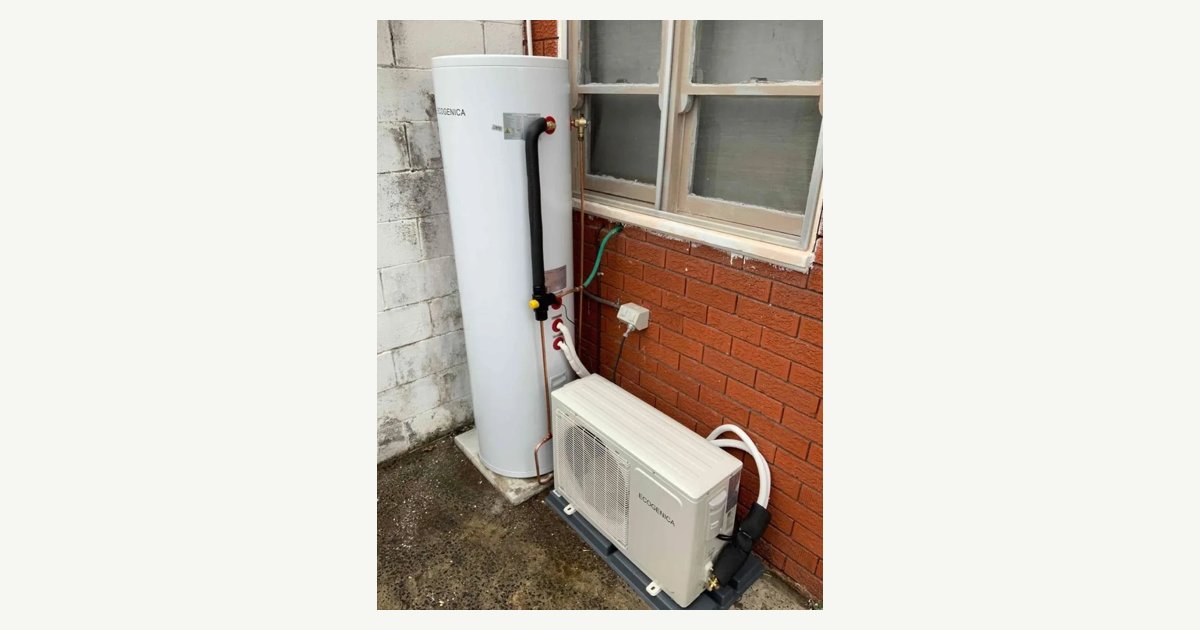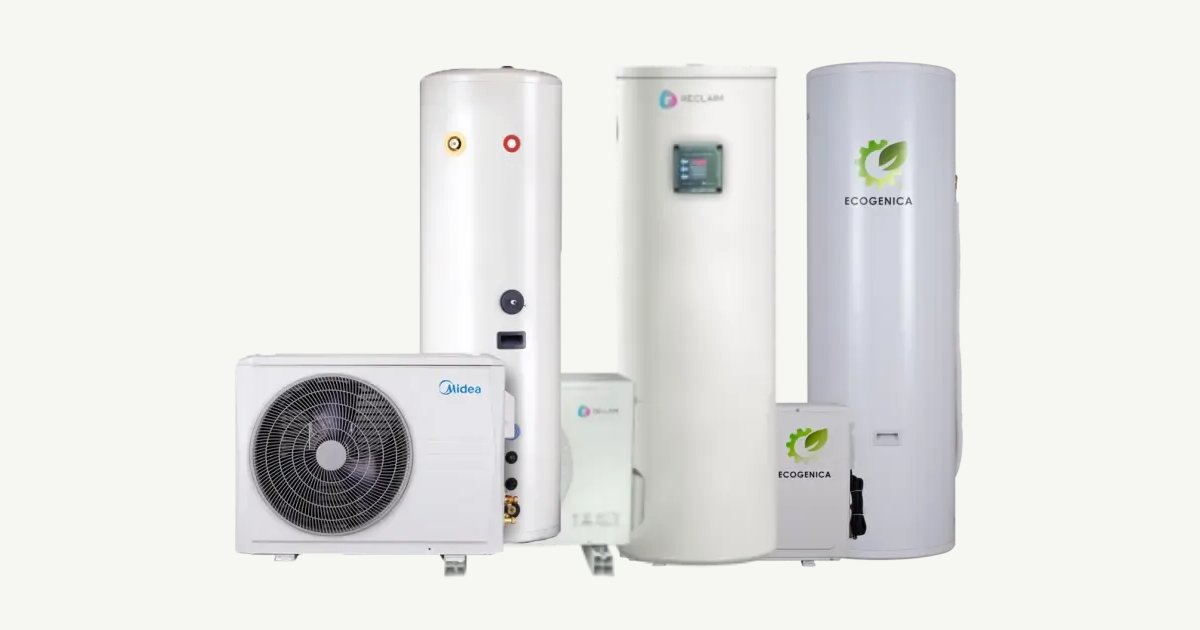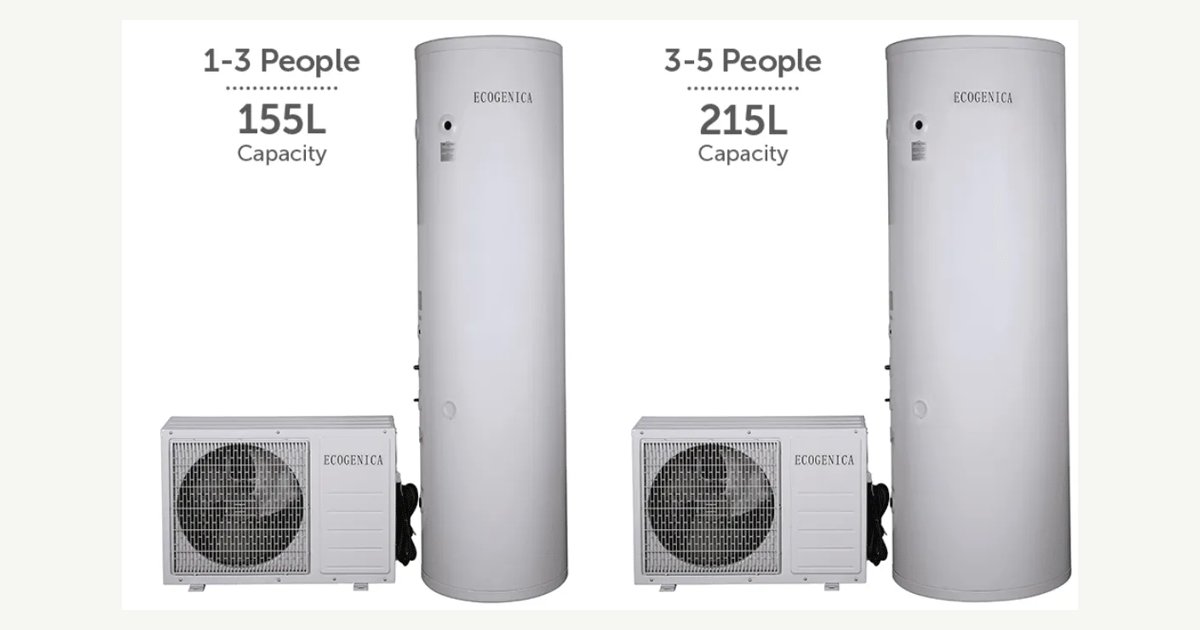
A traditional electric hot water tank heats water with an element, a bit like a large kettle. A heat pump, such as an Ecogenica split system, uses electricity to move heat from the outdoor air into the water instead. That is why a heat pump usually uses less electricity to heat the same amount of water. How much less depends on the model, your climate, your tariff and how you use hot water.
The original version of this page was a short video explainer surrounded by offer pricing that no longer applies. This guide covers the same comparison in writing.
How a traditional electric tank works
An electric storage tank has one or two heating elements inside an insulated, mains-pressure tank. A thermostat switches the element on when the water cools and off when it reaches temperature. Many are connected to an off-peak tariff so they heat overnight. The element turns electricity straight into heat, so all the heat in the water comes from electricity you pay for. Electric tanks are simple, quiet and familiar, which is why so many homes have one.
How gas systems compare
A gas storage system heats the tank with a burner underneath and vents the combustion gases through a flue. A gas continuous-flow (instantaneous) system has no tank and heats water as it passes through. Both need a gas supply, and their running cost depends on gas prices and your usage. Switching from gas to a heat pump involves electrical work and, usually, disconnecting the gas appliance, so it needs a site assessment.
How a heat pump works
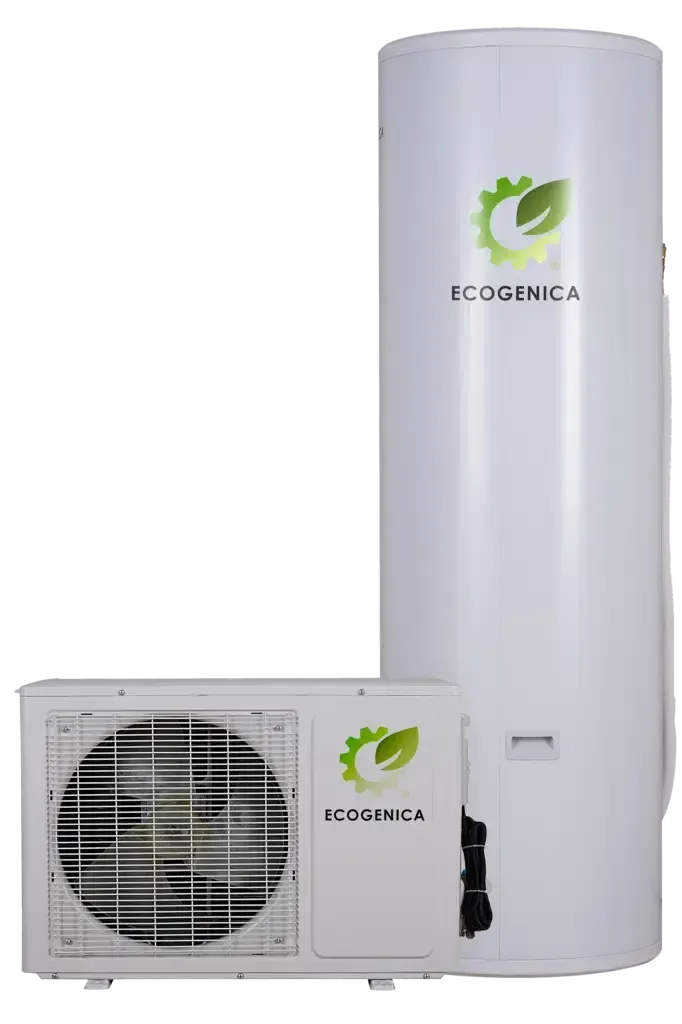
A heat pump works like a refrigerator in reverse. A fan draws outdoor air across a coil containing refrigerant, which absorbs heat from the air. A compressor raises the refrigerant's temperature, and that heat passes into the water in the tank. In a split system like Ecogenica's, the fan, coil and compressor sit in a separate outdoor unit connected to the tank by pipework. In an all-in-one, they sit on top of the tank. Electricity runs the fan, compressor and controls, but most of the heat comes from the air.
Side by side
| What to compare | Electric storage tank | Gas storage tank | Heat pump (split system) |
|---|---|---|---|
| How it heats | Electric element | Gas burner | Moves heat from the air using a compressor |
| Energy source | Electricity, for all of the heat | Gas | Electricity, with most of the heat taken from the air |
| Space | One tank | One tank, plus flue clearances | Tank plus an outdoor unit with airflow |
| Noise | Quiet | Quiet, with some burner sound | A low hum from the outdoor unit while heating |
| Cold weather | Little effect on heating | Little effect on heating | Works harder and may pause to defrost |
| Heating speed | Depends on element size | Usually reheats quickly | More gradual; some models have a boost element |
| Installation | Usually a straightforward swap | Gas fitting and flue | Site assessment for airflow, electrical supply and condensate drainage |
Which suits your home?
- A heat pump can suit many homes replacing an electric tank, especially where there is outdoor space with good airflow. It pairs well with rooftop solar if the model has a timer.
- An electric tank may still make sense where there is no suitable outdoor position, such as some apartments.
- Gas is a separate decision. If you're moving away from gas, plan the electrical work and gas disconnection together.
For a wider comparison of system types, the Australian Government's Your Home guide to hot water is a good independent reference.
Ecogenica's current range
Ecogenica's current split-system range is the FRE-W family, with 215L, 290L and 330L families. Similar names can refer to different equipment, so compare the complete model number, storage volume and manual. See Ecogenica models and warranties. If an all-in-one suits your site better, compare ECONOVA, Chromagen / Midea and iStore.
Rebates
Programs such as Victorian Energy Upgrades and the Solar Victoria hot water rebate can reduce the cost of replacing an older system with an eligible heat pump. You may be eligible, but rules change, and your written quote shows any discount. See our rebates page.
How Le Water can help
We supply and install heat pump hot water systems across metropolitan Melbourne, including the Ecogenica split range. Tell us what you have now, electric or gas, and how your household uses hot water. We'll check whether a heat pump suits your site and quote the whole job in writing, including removal of the old system, any electrical work and the warranty terms that apply.